UX concept · Dispatch Engine · B2B SaaS
Turning operational decisions into explainable assignments
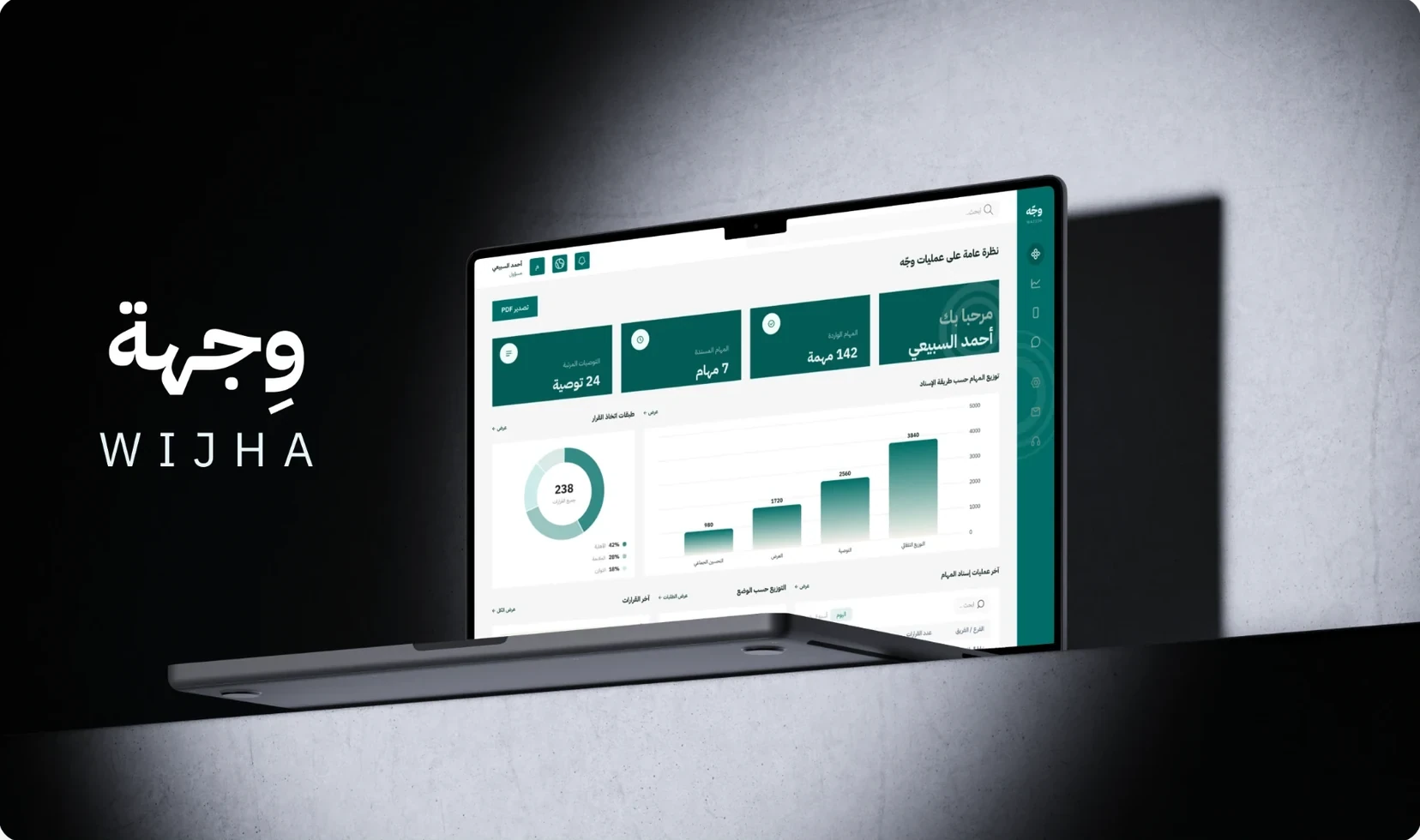
Wijha is an AI-powered dispatch engine that determines who should handle each work item by evaluating eligibility, fit, cost, and balance, while keeping the final decision traceable and human-controlled.
The problem
Once a work item enters the system, the difficult question is no longer what it is. It is who should handle it, and why them.
- Project
- Wijha is a dispatch engine designed to structure how work is assigned to the right resource. It evaluates eligibility, ranks suitable candidates, and supports the final assignment decision through configurable rules and an explainable decision record.
- Context
- The assignment step sits between incoming work and the people responsible for handling it. In the existing workflow, supervisors may need to consider operational rules, specialist availability, workload, and work-item requirements before deciding where work should go. The challenge was to turn that judgement into a structured process without removing human control.
- Key finding
- The challenge was not simply choosing a specialist. It was making the assignment logic explicit: who is eligible, how candidates are ranked, what dispatch mode should be used, and why the final decision was made.
- Users
- The primary user is the distribution supervisor responsible for reviewing candidate recommendations and making or approving the final assignment decision. Administrators also need to configure the rules that shape how those recommendations are generated.
- Design focus
- The design focused on three things: making assignment reasoning visible, giving operations control over the rules that shape recommendations, and keeping a human decision point when the workflow requires it.
The operational role behind the decision
Wijha is designed around the people responsible for evaluating recommendations, configuring the rules, and making the final assignment decision.

Reviews ranked candidates, evaluates the recommendation, and approves or overrides the final assignment decision. The role is responsible for making sure each assignment follows the configured rules and is recorded with a clear reason.
Fictional persona created for this concept.Daily responsibilities
The core functions this role manages on a day-to-day basis.
- 01
Work Assignment & Routing
Registers incoming work items and routes them to the appropriate specialized team.
- 02
Evaluating Resource Fit
Assesses specialized experience, current active workload, past performance speed, and skill match.
- 03
Exceptions & Redistribution
Coordinates overrides due to sudden unavailability, leaves of absence, or potential conflicts of interest.
- 04
Monitoring Availability
Tracks active leaves, specialized training schedules, temporary transfers, and current field presence.
Key pain points
No consistent mechanism
Assignment decisions relied on manual judgement rather than a shared, structured mechanism.
Limited traceability
The reasoning behind candidate selection was difficult to review consistently.
Uneven workload
Availability and current workload could affect assignment decisions across resources.
The 3-step workflow with Wijha
How the supervisor makes an explainable and reliable assignment using the decision engine.
- 1
Review the work
Understand the incoming work item and its requirements.
- 2
Evaluate options
Review eligible candidates, ranking, and recommendation reasoning.
- 3
Make the decision
Accept, override, and record the final assignment decision.
Why this problem demanded a system, not a workaround
The numbers behind the manual distribution process that this concept was designed to replace.
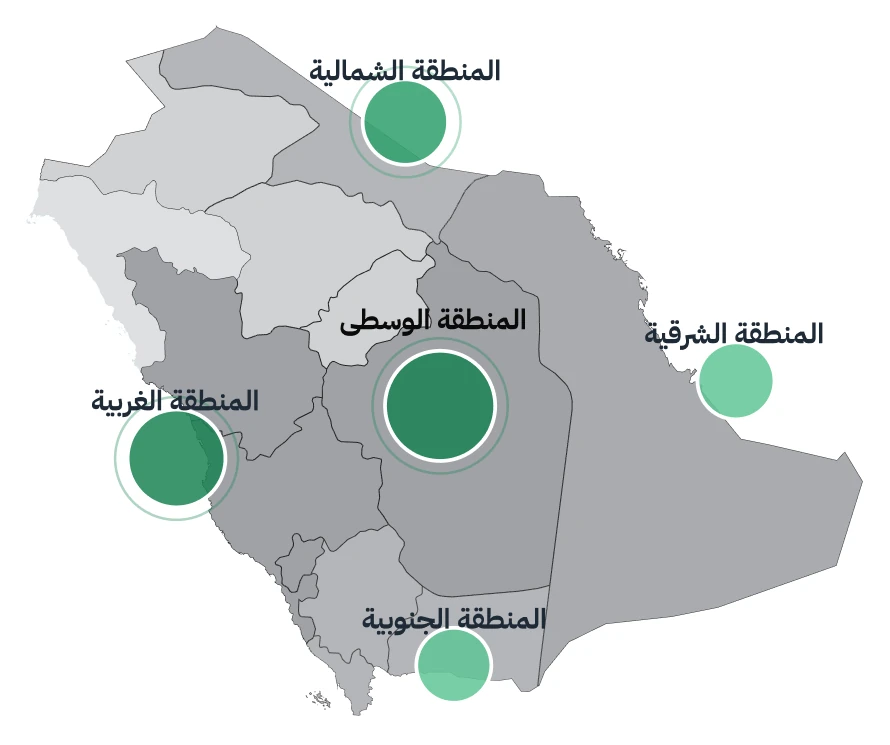
- 116
Locations nationwide
Branches spread across 116 regions and locations, each with varying specialization levels.
- 80%
Core work type
Most of the distribution workload is tied to one work type, which defined the scope of the first phase.
- 0
Unified mechanisms
No standardized distribution rules existed. Every assignment relied entirely on personal judgement.
- 18×
Duration variance
The gap between the shortest and longest work item is 18-fold, making workload prediction nearly impossible without a system.
Figures reflect the project context and are illustrative.
One flow. Every decision explainable.
This UX concept demonstrates that a transparent, traceable assignment process can be designed end to end without disrupting the existing workflow.
- 01
Document the decision
Every assignment carries a reason. The concept proves the interface can capture accountability without slowing down the supervisor.
- 02
Make evaluation visible
Who was considered, who was excluded, and why, all visible in a single screen. No hidden logic.
- 03
Configure the rules
Eligibility criteria, ranking weights, and dispatch modes live in one screen that operations leads can tune without engineering.
- 04
Keep human control
The system recommends. The supervisor decides. The record captures both, proving the interface supports trust, not blind automation.
The requirements that couldn't be traded away
These were the constraints that shaped every screen. They were not feature requests. They were the minimum conditions required for trust.
See the reasoning behind a recommendation before acting on it
Turn a manual judgement call into a structured, documented decision
Know who was excluded from consideration, and why
Let operations leads tune rules without engineering support
Keep a way to override a recommendation without leaving the flow
Keep a human decision point where the workflow requires it
Give operations leads control over the rules that shape dispatch decisions
Use outcomes to inform future tuning of the decision logic
How the product concept became a first UX direction
Before designing the screens, I worked through four stages: aligning with the product team, framing the problem from stakeholder input, exploring early directions with AI-assisted tools, and shaping the first UX concept.
- 01
Align with Product
Aligned directly with the product team to understand the concept, scope, and intended role of Wijha before shaping the UX direction.
- 02
Explicit decision logic
Reviewed stakeholder questions and operational context to clarify the assignment problem and identify what the experience needed to make explicit.
- 03
AI-Assisted Exploration
Used AI-assisted tools to rapidly explore early structures, interaction directions, and alternative ways to represent the dispatch concept.
- 04
Shape the Initial Concept
Synthesized the explored directions into a preliminary UX concept, expressed through four POC screens rather than a final production design.
Four decisions that shaped the core experience
Each decision came directly from the way the dispatch engine works, rather than being imposed as a UI convention.
- 01
Exclusions stay visible next to the shortlist
Deleting rejected candidates would delete the evidence for the decision, so they stay on-screen, greyed out, with the rule that excluded them.
- 02
Ranking weights must visibly sum to 100%
Administrators should never wonder whether their changes still add up, so the total stays on screen while sliders move.
- 03
Four dispatch modes, one dial
Auto-Assign, Recommend, Offer and Batch Optimise are framed as one control: the human's role shrinks or grows, but it's never designed out.
- 04
A decision can't submit without a reason
The reason field is required, not optional, because eventually someone will read the record as one.
Wijha had to fit the existing operational stack, not compete with it
The end-to-end flow, from the moment a work item arrives to the moment the result returns to the client system.
- 1
New work items
Entry point for incoming work
- 2
Client system
Initial intake via the client system
- 3
Wijha
Core processing platform
- 4
Apply eligibility
Determine eligibility criteria
- 5
Rank candidates
Evaluate and rank available resources
- 6
Assignment method
Auto-Assign or Recommend
- 7
Assign
Finalize the assignment
- 8
Record decision
Log the assignment outcome
- 9
Return result
Output the final assignment result
New work items
Entry point for incoming work
Client system
Initial intake via client system
Wijha
Core processing platform
Factors: Eligibility · Ranking · Dispatch · Decision
Apply eligibility
Determine eligibility criteria
Rank candidates
Evaluate and rank available resources
Assignment method
Auto-Assign or Recommend
Assign
Finalize the assignment
Record decision
Log the assignment outcome
Return result
Output the final assignment result
Upstream
The client system provides the work item and available context Wijha needs, so supervisors do not have to re-enter information already captured upstream.
Side by side
Existing client systems remain the systems of record. Wijha adds the decision layer that determines who should handle each work item and why.
The flow, made visible
Each screen carries one slice of the dispatch flow. Select a screen to enlarge it.
Operations View
The full picture before any action.
A donut chart, not a bar chart
The proportion between Eligibility, Fit, and Balance matters more than the exact count. A donut reveals imbalance at a glance.
Pending items get their own lane
Anything waiting on a human is surfaced as a named queue, not buried behind a filter a supervisor might never open.
Outcomes sit next to volume
Showing recent decisions alongside active workload builds trust. Supervisors see the system working, not just claiming to.
Layer Configuration
Where judgment becomes configuration.
Mandatory gates are locked, not just labeled
Conflict-of-interest exclusion isn't a toggle anyone can quietly switch off.
Preview before save
A rule change previews its effect before it touches a single live work item.
One screen, not a settings maze
Eligibility, ranking, and dispatch mode live together because they're one decision, not three.
Work Assignment
See who qualifies, who ranks highest, and who didn't make it.
Top candidate gets a full profile card
The person a supervisor is about to act on deserves more than a table row.
Ineligible rows stay visible, greyed
Showing who almost made it turns “trust me” into “see for yourself.”
Completion rate sits next to workload
Fit isn't just specialty match. It's demonstrated capacity.
Assignment Decision
The moment a supervisor commits, and the record begins.
Reason is required, not optional
A decision can't be submitted without a stated reason attached to it.
Alternatives stay one click away
Overriding the recommendation should never feel like leaving the flow.
The summary reads like a record
Because eventually, someone will read it as one.
UX concept, screen specification, and interface design for the Wijha POC, translating a six-track decision engine into an operational flow where supervisors can review recommendations, override when needed, and leave a traceable decision.
The next step would be to validate the decision flow with real operational scenarios, especially edge cases where eligibility rules remove the entire shortlist or require an alternative path.
From rules to decisions.
Wijha makes the logic behind assignment visible, giving operations teams a clearer way to review, control, and record each decision.
A proof-of-concept, still in progress. Names and sector-specific details are generalized, and the persona is fictional.